Salaspils concentration camp was established at the end of 1941 at a point 18 km (11 mi) southeast of Riga (Latvia). The Nazi bureaucracy drew distinctions between different types of camps. Officially, Salaspils was a Police Prison and Work Education Camp (Polizeigefängnis und Arbeitserziehungslager). It was also known as camp Kurtenhof after the German name for the city of Salaspils. Planning for the development of the camp and its prisoner structure changed several times. In 1943, Heinrich Himmler briefly considered converting the camp into an official concentration camp (Konzentrationslager), which would have formally subordinated the camp to the National Security Main Office (Reichssicherheitshauptamt or RSHA), but nothing came of this. The camp has had a lasting legacy in Latvian and Russian culture due to the severity of the treatment at the camp, especially with regards to children.
***
Later history
Starting in 1949 legal proceedings were brought against some of the persons responsible for the Nazi crimes in Latvia, including the Riga Ghetto, and the Jungfernhof and Salaspils concentration camps. Some accused were condemned to life imprisonment. Gerhard Kurt Maywald is one such Nazi, convicted of crimes committed in the camp.
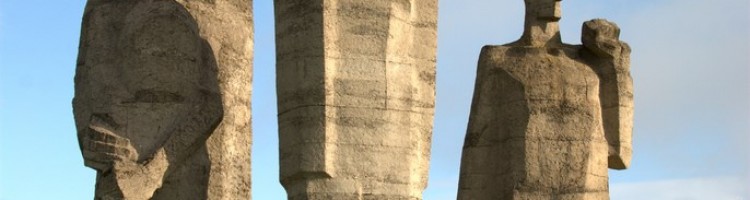
In 1967 a memorial was established in Salaspils, which included an exhibit room, several sculptures and a large marble block. During the time of the Soviet Union, the Russian group “Singing Guitars” (Russian: Поющие гитары) dedicated a song “Salaspils” to the children's camp.